A hail storm rolls through Irving and the first feeling is usually a scramble: is the roof okay, what do I touch first, who do I even reach out to. The good news is that the right first moves are calm and in order, and none of them involve climbing onto a wet roof in the dark. Dallas County has taken hail as large as 4.00 inches on the NOAA record, so real damage happens here, and a clear head in the first day or two protects both your home and your claim. When you are ready, you send one form and a local roofer follows up with you for a free, documented look.
Start with safety, and stay off the roof
Before anything else, make sure the people inside are safe and dry. If a ceiling is sagging or water is coming in around a light fixture, cut power to that area at the breaker and move anything valuable out from under it. A wet roof after hail is slick and often bruised in ways you cannot see from above, so the roof itself can wait. There is no photo or measurement worth a fall.
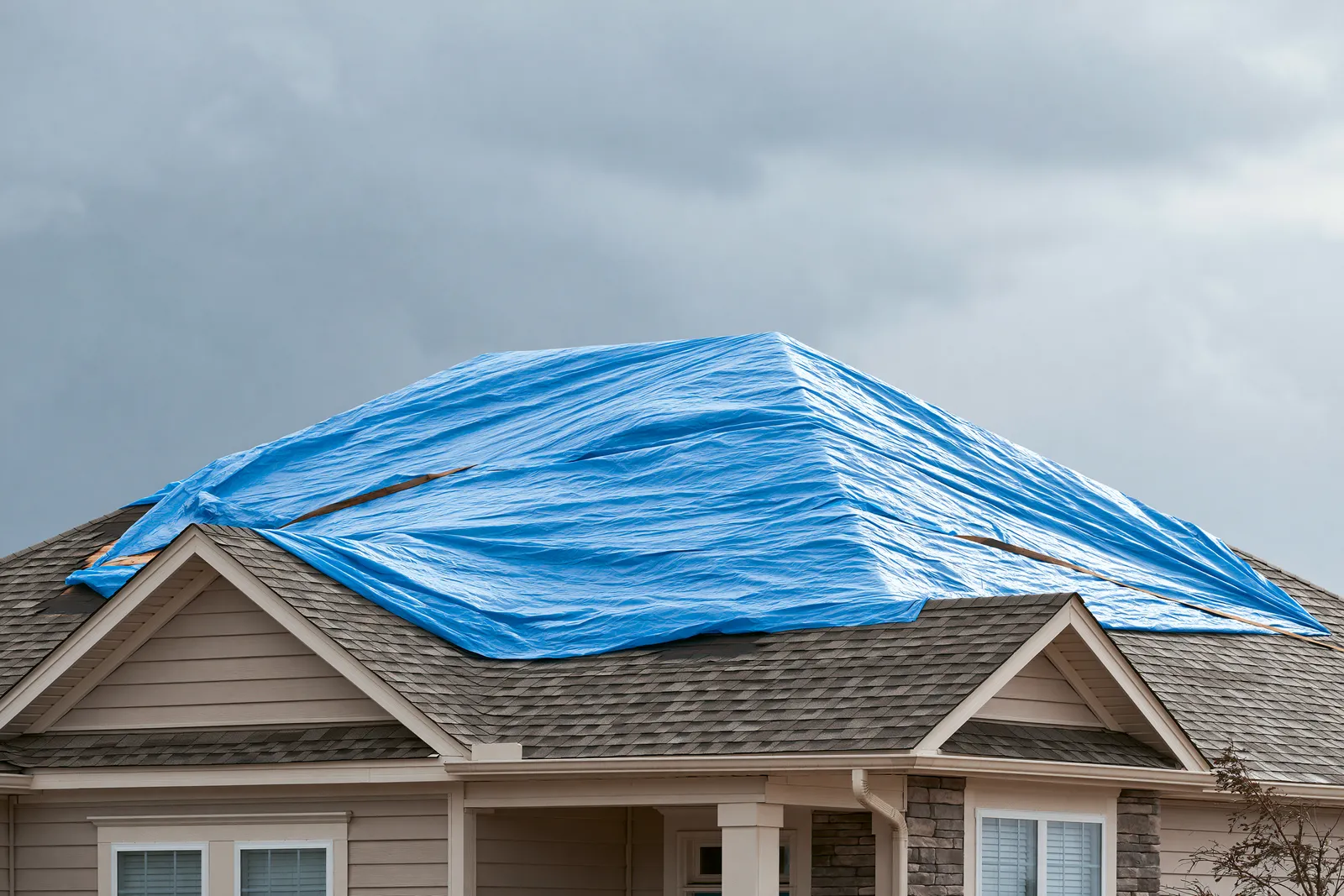
If water is actively coming in, that is the one thing worth acting on right away. Set a bucket, pull back what you can, and note where it is entering. A local roofer can stabilize an active leak with a temporary dry-in so the inside stops taking damage, and the permanent repair gets planned once the roof is dry. A tarp is a bandage, never the fix, and any honest roofer will say so.
Document the damage while it is fresh
Once everyone is safe, the most useful thing you can do is record what the storm did while the evidence is still fresh. You do not need to get on a ladder for this. Most of what an adjuster and a roofer want to see is visible from the ground or the second-floor windows.
- The date and rough time of the storm, plus the largest hail you saw. A coin next to a stone in a photo gives scale.
- Dents on soft metal: gutters, downspouts, the AC unit fins, and any metal vents or flashing.
- Granules washed into the gutters and pooled at the base of downspouts, which is asphalt shed from the shingles.
- Cracked or torn window screens, and dings on the car if it was in the driveway.
- Any interior water stains, with a photo and the date you first noticed each one.
Get a free, documented inspection
With the inside safe and the basics noted, the next move is a proper look at the roof by someone who does it for a living. A free inspection from a local roofer covers the planes you cannot see, the flashing, the vents, and the soft metals, and it comes back to you as a documented report with photos. That record is the thing that turns a hunch into a decision, whether the answer is a small repair or a claim.
Storm calls go to the front of the line here, and a local roofer follows up with you, so a documented visit does not have to wait long after a bad hail day. Same-week storm response is the pace to expect when the weather has just turned. The point of the visit is a clear, honest read of the roof, not a hard sell.
The claim is yours, and you control it
If the damage is real, you may decide to open an insurance claim, and it helps to know how that works before you make the call. You open the claim and you control it. A local roofer can document the damage and meet your adjuster on the roof so nothing gets missed, but the roofer does not file the claim for you, and neither do we. Our part is to take your request and get it to a local roofer.
File promptly and check your own policy for the window to report storm damage, since it varies by carrier and is not the same for everyone. If you want the full sequence laid out, the insurance claim guide walks through the date of loss, the adjuster visit, and your deductible in plain English.
Don't sign anything in the driveway
After a big Dallas County hail day, trucks and door-knockers show up fast, and some will press you to sign on the spot. Slow that down. A signature on a clipboard in your driveway can hand over control of your claim or lock you into one roofer before you have seen a single thing in writing. There is no storm-response reason to sign under pressure.
Take the documented inspection, get the scope and the number in writing, and compare. A roofer worth hiring will put it all on paper and give you room to read it. If a hailstorm just moved through, the storm and hail damage overview shows what a sound response actually looks like, so you can decide at your own pace. Still shaken up? Getting it looked at first is the calm place to start.