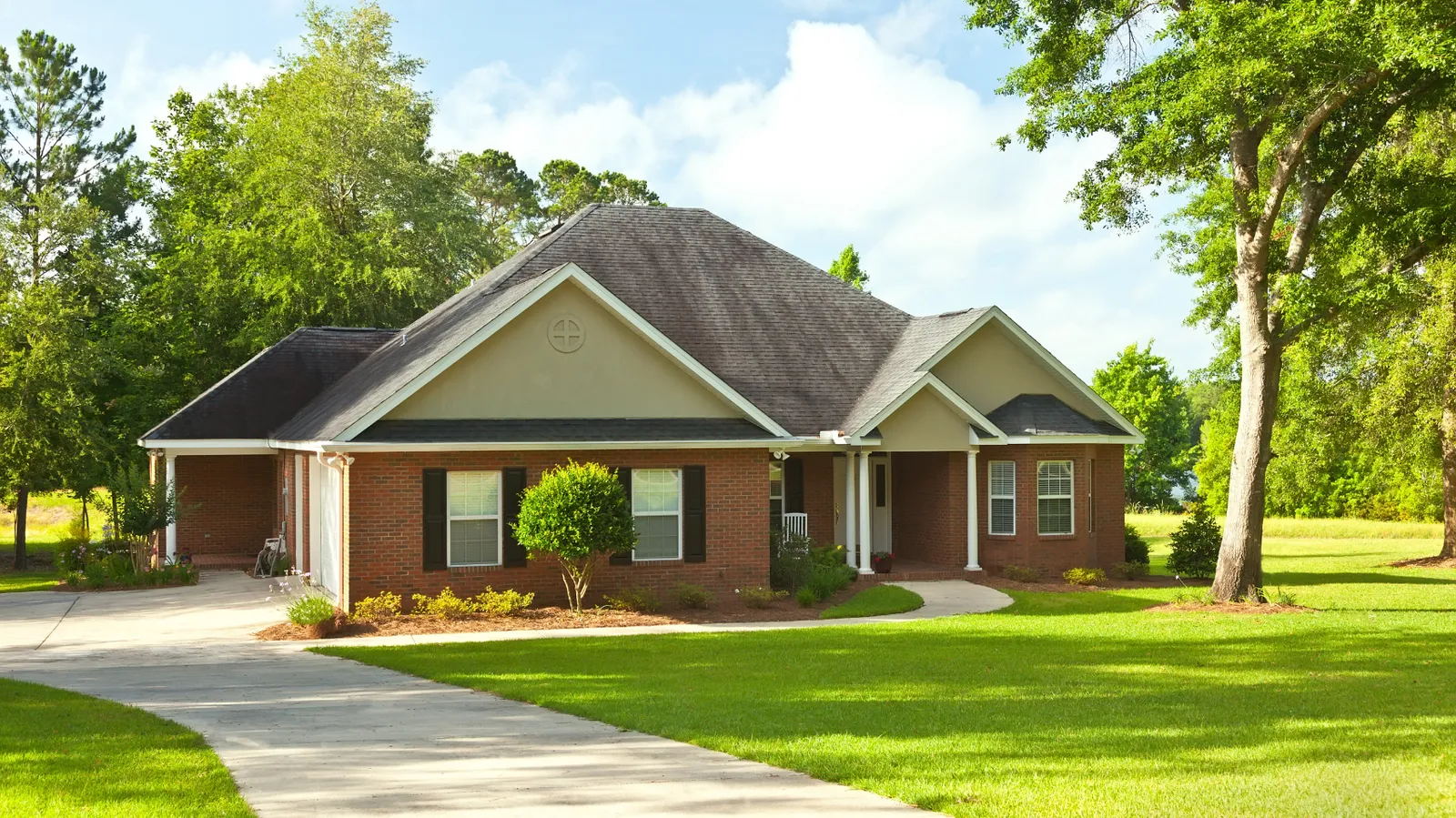
Chimney Flashing Repair in Irving, TX
When a brown stain shows up on the wall beside the fireplace, the metal sealing the chimney has usually given out, and a local roofer rebuilds that seal instead of hiding it under another bead of caulk.
Show us the stain
The chimney is the first place a roof leaks
A chimney punches a hole straight through the roof, and the metal sealing that hole takes more abuse than any shingle around it. That is why, across Irving, the wall beside the fireplace is the single most common spot a roof starts to leak. Roofers call the metal flashing, and it does its job in two pieces that only work together: step flashing, short pieces laced in with the shingles up each side of the brick, and counter flashing, a cap course cut into the mortar joint and folded down over the steps.
Let either piece rust, lift, or slip out of that joint and rain runs behind it, tracking down the framing until it stains a ceiling a room away. A fresh bead of caulk buys a season, never a fix. Your roofer strips the failed metal and rebuilds both layers so the water has nowhere left to sneak in. When the leak has already traveled through the house, roof leak repair covers how a roofer traces the stain back to where it started.
What a chimney flashing repair includes
The two metal layers, a fresh mortar joint, and whatever the old patch job left up there.
- 01Step flashing up both sides
- New step metal goes in course by course up each side of the chimney, every piece lapped over the one below it, so water is handed down and off the roof and never pushed sideways into the deck.
- 02Counter flashing set into the mortar joint
- The cap layer is cut into the mortar joint above, sealed, and bent down over the step flashing. This is the exact layer a caulk-only patch skips, which is why those patches keep failing.
- 03A cricket behind a wide chimney
- A wide chimney on the downhill side of a slope gets a small peaked diverter behind it, so runoff splits and runs around the brick instead of ponding against the back wall.
- 04Old caulk and tar taken off first
- Years of smeared repairs come off before any new metal goes on, back to clean brick and sound decking.
New metal laid over old goop just inherits the old leak, so every shortcut comes off before the rebuild starts.
How the repair actually goes
Find the real leak first, then rebuild it once so it stays fixed.
Find where the water gets in
It starts in the attic around the chimney chase and on the roof at the brick, reading the existing metal, the crown, and the shingles. Chimneys get blamed for crown and shingle leaks too, so the source gets confirmed before anything is torn off.
Strip it back to clean brick
The old step and counter flashing come off along with every prior bead of caulk and tar, down to clean brick and sound decking, so the new metal seats on a real surface instead of on old failure.
Rebuild both layers and prove it
New step flashing is woven in with the shingle courses, counter flashing is set into a fresh cut in the mortar joint and lapped over it, the joint is pointed up, and the assembly gets a water check. The number you approved in writing is the number.
Signs the chimney is the leak
The clues gather on the fireplace wall and in the attic just above it.
- A ceiling or wall stain beside the fireplace that spreads after a hard rain
- A musty, damp smell in the attic right around the chimney chase
- Rust streaks or lifted metal where the brick meets the shingles
- A thick line of old caulk where metal should be tucked into the joint
- Water sounds or drips inside the firebox during heavy weather
The stain rarely sits right under the gap that caused it, so a roofer reads the flashing, the crown, and the shingles around them in one pass instead of chasing the symptom.
Why chimney flashing gives out on older Irving roofs
Irving's housing runs older than a lot of the metroplex, and many of its established neighborhoods were built out back in the 1970s. That means a great many chimneys here are working on mortar joints pushing fifty years old, and a mortar joint is exactly what counter flashing grips. As the joint crumbles and opens, the metal set into it loosens, and a seam that used to shed water starts letting it in. Add the Texas heat and the caulk shortcut most old repairs leaned on, and failure is only a matter of seasons: the sun bakes the flex out of any sealant until it cracks, while metal set into a fresh joint keeps doing its job for decades. Hard weather can force the issue too. On the Dallas County record the last few years brought 23 hail days and hail up to 4.00 inches, and stones that size dent flashing and peel it back off the brick.
- 01Mortar joints past their prime
- With many older Irving homes built back in the 1970s, a lot of chimneys grip mortar joints closing in on fifty years old, and a crumbling joint is exactly what counter flashing needs to hold.
- 02Caulk cracks, metal lasts
- The sun hardens and splits any sealant a prior repair leaned on, while flashing set into a fresh joint keeps shedding water for decades. One is a patch, the other is a fix.
- 03Brick and roof pull apart
- A masonry chimney and the roof framing move at different rates through the seasons, and two-layer flashing is built to absorb that. A rigid smear of tar is not.
Flashing is not only a chimney problem. The same metal seals walls, dormers, and pipe penetrations, and roof repair along those runs is the same honest rebuild.
Questions about chimney leaks
What Irving homeowners ask once the stain shows up.
Q1Does a fresh bead of caulk fix a leaking chimney?
Q2What is a cricket, and does my chimney need one?
Q3Can chimney flashing be repaired, or does it have to be fully replaced?
Q4Will homeowners insurance cover chimney flashing repair in Irving?
Q5How much does chimney flashing repair cost in Irving?
Q6How do I know the chimney is leaking and not the roof itself?
Fix the chimney leak once
A photo of the stain helps if you have one, but a sentence or two will do. A local roofer confirms where the water is really getting in, rebuilds the flashing as the pair it is meant to be, and you approve the number in writing before the first piece of metal comes off.