
Roof Leak Repair in Irving, TX
The stain on your ceiling sits well downstream of the leak, so a local roofer traces the water back to the boot, flashing, or valley that failed and prices that one repair in writing.
Where is the water showing?
Why the stain is the wrong place to patch
Water finds its way in at a worn pipe boot, a lifted piece of flashing, or an open valley, then runs along the underside of the decking until it meets a nail or a seam and finally drops. By the time it stains a ceiling in Irving, TX, it can be several feet, or a whole room, from the spot that actually failed. Patch the drywall above the mark and you have sealed a piece of sound roof while the real opening keeps letting water through.
So the work runs backward: from the stain up into the attic to read the track the water left, then onto the roof to confirm and photograph the failed detail before anything is touched. A local roofer names the one entry point, repairs it at the source, and sets the number in writing instead of guessing from the ground. If water is actively coming in during a storm, that is a different first move, and the emergency roof repair page covers getting it stopped and stabilized before the permanent fix.
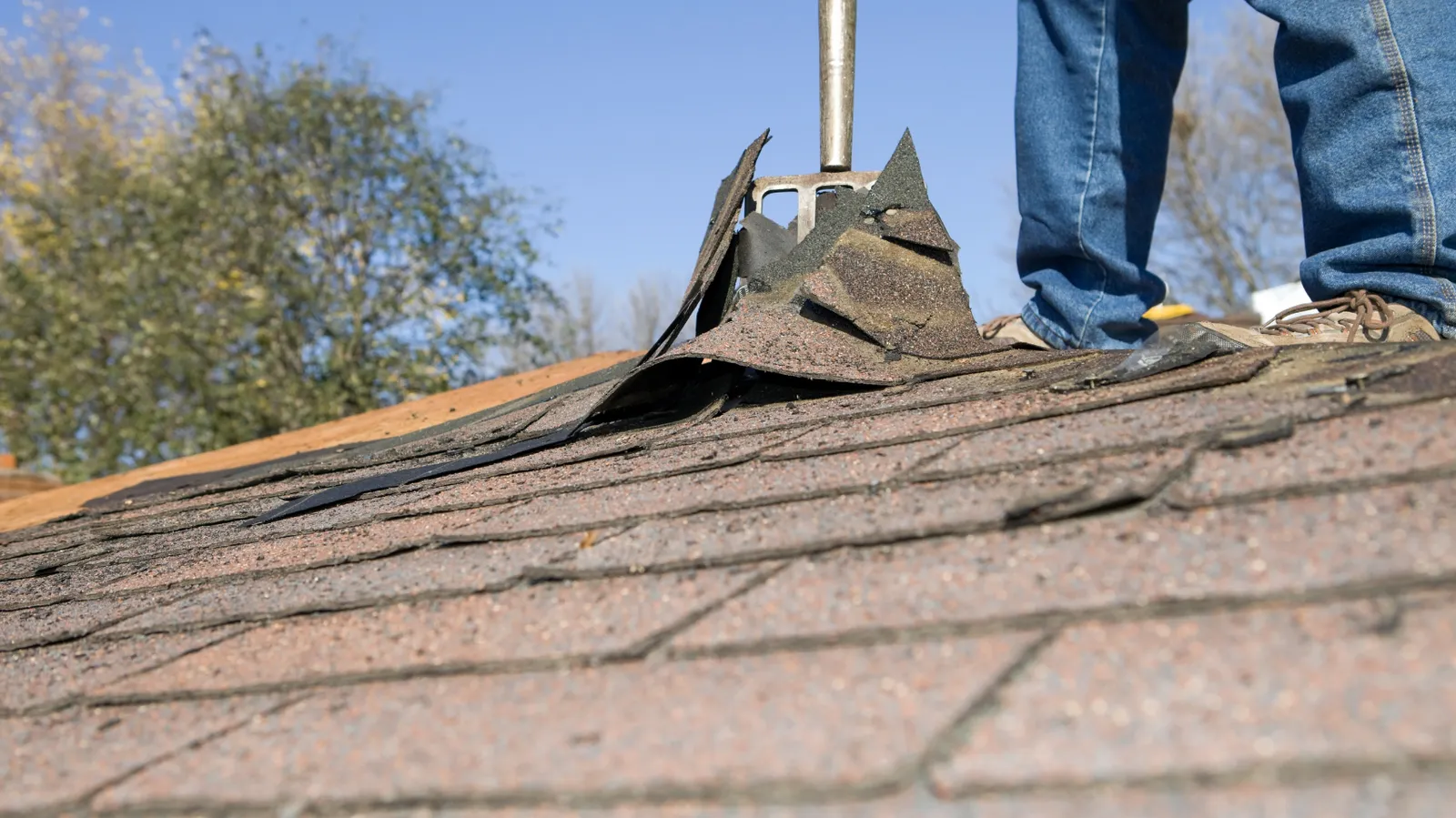
The details a leak usually traces to
These fail years before the open shingle field does, so the trace starts here.
- 01Pipe boots
- The rubber collar sealing each plumbing vent dries, cracks, and pulls away under years of Texas sun, and a split boot is the single most common leak a roofer finds.
- 02Flashing at walls, chimneys, and skylights
- The bent metal that carries water across the roof's joints works loose, rusts, or was never lapped right, and a leak there can surface far inside the house from where the metal gave out.
- 03Valleys
- Where two slopes pour into one channel, that line carries more water than anywhere else on the roof, so a worn or debris-packed valley turns an ordinary rain into a steady indoor drip.
- 04Nail pops and wind-creased shingles
- A backed-out nail or a shingle folded by wind opens a path the field is not meant to have, and it often shows only when the rain drives from one direction.
Most leaks come back to one of these, not the roof as a whole, which is why the source is confirmed before any larger work is discussed. When the trail leads to the chimney, chimney flashing is usually the detail that has given out.
Tracing a leak to its source
The path from the ceiling stain back to the real opening, in order.
Start where the water shows
When the drip appears, which rains bring it on, and where the stain sits all narrow the search before anyone climbs a ladder, because the timing and the direction of a leak are half the clue to its source.
Read it from the attic
The underside of the decking holds the map the ceiling cannot: water tracks and staining that run uphill point back toward the true entry, so the attic side gets read before the top side.
Confirm and repair the entry point
The suspect detail is checked on the roof and photographed, so the cause is shown rather than assumed, then the boot, flashing, or valley is repaired at the source with the price agreed in writing first and the area around it checked so water cannot simply find the next gap.
How a leak shows itself before you see a drip
Water announces itself in more ways than an obvious drip.
- A brown or yellow ring on the ceiling that spreads or darkens after each rain
- Damp or matted insulation, or a musty smell, in the attic or an upstairs room
- Paint or drywall that bubbles, blisters, or sags along a ceiling or the top of a wall
- Water tracking down from a light fixture, vent, or ceiling fan during heavy rain
- Granules collecting in the gutters and dark, flattened patches on the shingles overhead
Caught while it is still one stain, a leak is usually a modest repair; left to soak the decking and insulation, it grows into carpentry and drywall work.
What a roof leak repair runs
The figure follows what the trace turns up. A cracked pipe boot is a quick, low-cost swap. Failed flashing takes more metal and more labor, a valley rebuild more still, and decking that has gone soft under a leak that ran for months adds to the scope the moment it is opened. That number is written down after the source is confirmed, never quoted blind over the phone. If the trace shows the leak is one more symptom of a roof near the end of its life, the new roof cost guide lays out honest replacement ranges so the repair-or-replace call is made on real figures, not a hunch.
See honest cost ranges- A pipe boot swap sits at the low end of leak repairs
- Flashing and valley work carry more metal, labor, and time
- Soft decking found along the water's path adds to the scope
- The written price follows the confirmed source, not a phone estimate
Why Irving roofs leak where they do
A good deal of Irving's housing runs older than the metro average, and many of its established neighborhoods were built out around the 1970s, so a lot of these roofs are on their second or third covering and sit over decades-old flashing, boots, and valleys. The details that fail first are exactly the ones that have baked under Texas sun the longest, which is why so many Irving leaks trace to a hardened boot or a tired flashing rather than the shingle field. Weather does the rest. The Dallas County record carries 23 hail days and a largest stone of 4.00 inches over recent years, and hail that size bruises shingles and lifts flashing without always leaking the same day. The opening it leaves can sit quiet for weeks, then show up as a stain during an ordinary rain long after the storm that caused it is forgotten.
- 01Older roofs, older details
- On a 1970s Irving home the boots and flashing have aged for decades, so they give out well before a newer roof's would, which keeps them at the top of the culprit list.
- 02Storm damage on a delay
- Hail on the Dallas County record bruises and cracks a roof without an immediate leak, so the water often arrives seasons later, once the weakened spot finally opens.
- 03Leaks that follow the wind
- A leak that only shows when rain drives from one direction points to a flashing or seal failure on that side, a real clue the trace uses to pin the source.
When the trace turns up damage in several places rather than one, you get the honest read and real numbers, and the fix becomes a broader roof repair that closes every opening the water found, not a single patch dressed up as a cure.
Roof leak questions from Irving homeowners
What to check, what can wait, and how a leak actually gets traced.
Q1Why is the water stain nowhere near the actual leak?
Q2How does a roofer find where my roof is leaking?
Q3Can a roof leak wait until it is convenient?
Q4Do older Irving roofs leak more than newer ones?
Q5Will repairing the leak clear up the ceiling stain?
Q6Is it worth getting the leak looked at before it gets worse?
Trace the leak to its real source
One clear next step: tell a local roofer where the water shows and which rains bring it on. The leak gets traced back to the boot, flashing, or valley that failed, the source is repaired, and the stain stops coming back.