Emergency Roof Repair in Irving, TX
When water is getting in, the safe move is to stop it first: send the form, a local roofer follows up at your address, and the roof is stabilized before the permanent repair is planned.
Roof leaking right now?
Get the water stopped, then repair it right
An emergency roof call in Irving has one job for the night: keep the weather on the outside of the house. A local roofer gets a fastened tarp or an emergency dry-in over the open section, which means underlayment secured over the bare decking, and slows the active leak where the water is actually getting in. That step is temporary, and it is named as temporary out loud, because a tarp sold as the repair is how a roof ends up failing a second time.
Once the roof is dry and the damage can be read without guessing in the rain, the permanent roof repair is scoped and set in writing, with no pressure carried over from the bad night. Active water is always first here, and same-week storm response is the pace the schedule is built around.
What an emergency trip handles first
Control before repair, in that order.
- 01Emergency tarping
- The most common emergency call: a weighted, fastened tarp is set over the torn or missing section so rain runs off the roof instead of pouring into the house. Temporary by design, and said so.
- 02Dry-in over bare decking
- Where a tarp does not fit the damage, underlayment is fastened straight to the exposed deck so the surface sheds water until the real repair is scheduled.
- 03Slowing the active leak
- The entry point is found and checked from the roof or the attic side, so ceilings, insulation, and drywall stop taking on more water than they already have.
- 04Photos before it is covered
- Every opening is photographed before a tarp goes over it, so the damage is on record if the storm turns into a claim worth weighing.
When hail or high wind is what opened the roof, the Dallas County storm and hail guide covers the permanent repair that follows once the roof is stable.
How an emergency roof call is handled
The one safe move first, then the next.
Name the one safe thing to do now
Get out from under the water and stay off the roof, then send what the roof is doing: where the water shows, whether shingles or decking are exposed, whether the leak is spreading. That one message is enough to get things moving.
A local roofer follows up with you
The request goes to a local roofer carrying tarps and dry-in material already on the truck, stocked through storm season for exactly this. Active water is put ahead of scheduled work.
Stabilize, then document while it is fresh
The opening is tarped or dried in and called what it is, a temporary hold rather than the fix. The damage is photographed before it is covered, while the cause is still plain to read.
Put the permanent repair in writing
Once the roof is dry, your roofer scopes the real repair or replacement and sets the number in writing, backed by the photos, with nothing sold to you in the rain.
When a roof problem cannot wait
Send these right away, not on a normal schedule.
- Water dripping or running into the house while it is still raining
- A section of shingles or decking stripped bare by wind
- A tree limb, branch, or debris driven through the roof
- A ceiling stain that is spreading while the storm is still overhead
- Drywall sagging or bulging where water is pooling above a room
A faint mark that only shows up a day or two after the rain is usually not an emergency. Tracing that kind down on a normal schedule is what roof leak repair is for.
The Dallas County weather behind these calls
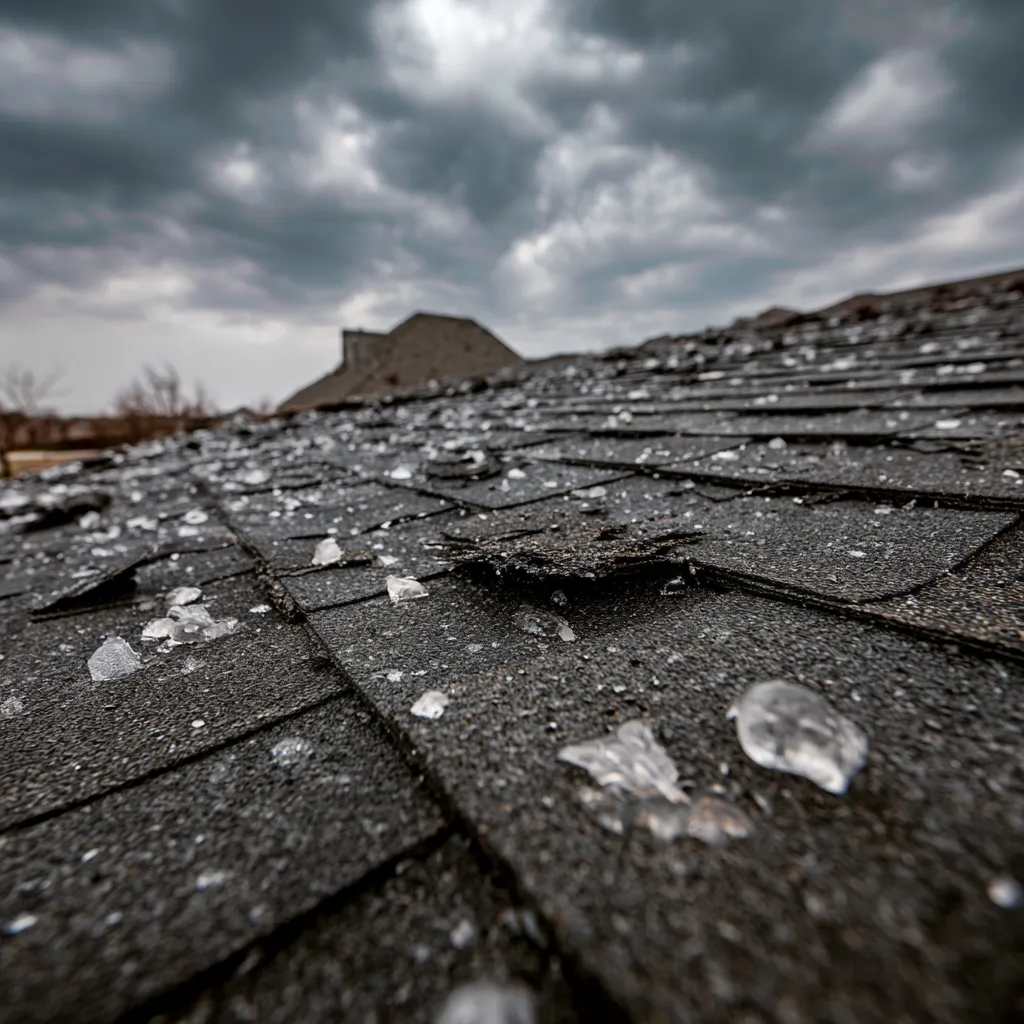
Most emergency roof calls in Irving trace back to what the Dallas County record already shows. Over roughly four recent years, NOAA logged 23 hail days and 96 hail reports on the county books, with hail measured up to 4.00 inches and a peak gust near 96 mph. Hail that size is not a nuisance; it is the kind that splits shingle mats and drives straight through older roofs. Irving's housing stock adds to it: a lot of the older homes here were built back in the 1970s, and a large share of those roofs are on their second or third covering. An aging roof and a 4 inch stone in the same storm is how a sound roof turns into an open one in a single evening.
- 01Very large hail
- Stones up to 4.00 inches on the Dallas County record fracture aging shingle mats and strip granules in one pass, which opens the path for the next rain.
- 02Wind that lifts and tears
- Peak gusts logged near 96 mph break the seal strip, crease the tab, and peel whole runs off older roofs that have lost their bond.
- 03Roofs from the 1970s
- With so many older Irving homes built back in the 1970s, many roofs are near or past their service life, so a storm a new roof would shrug off can breach an old one.
Readiness is the honest answer to all of this, not panic: material stocked through hail season, requests answered by a person, and an order of work that puts active water first.
Questions about emergency roof repair in Irving
What to do first, what a tarp really is, and how the cost and the claim work.
Q1What is the first thing to do when my roof is leaking in a storm?
Q2Is a tarp a permanent roof repair?
Q3How fast can a roofer get to an emergency in Irving?
Q4Does homeowners insurance cover an emergency tarp or dry-in?
Q5What will an emergency roof repair cost in Irving?
Q6Should I go up on the roof myself to stop the leak?
Water coming in tonight? Here is the next step
Send what the roof is doing and where the water shows. A local roofer follows up with you, the opening gets stabilized first, and no one talks numbers until the water is stopped.